
Expert Plumbers Co
Drain Cleaning in Milwaukee, WI near me
Milwaukee, WI · 53202 24/7 phone line

Milwaukee Drain Cleaning When the Basement Backs Up

Water is coming up the basement floor drain, or the tub gurgles every time the washer drains. Describe it to us and we connect you with an independent Milwaukee plumber who can clear the line and find out why, so call (380) 262-9173.

Nationwide Coverage
Symptom-First Matching
24/7 Emergencies
No Obligation
24/7
Live phone line

Drain Cleaning enquiry

Ask about Drain Cleaning in Milwaukee, WI

Tell us what the drain is doing and we connect you with an independent local Plumber.

Prefer to talk?
(380) 262-9173

Drain Cleaning services

Drain Cleaning and Plumbing Services in Milwaukee, WI

Symptom-led Drain Cleaning and related services across Milwaukee, WI. Tell us what the drain is doing and we match it to the right plumber.

01 / 06

Drain Cleaning

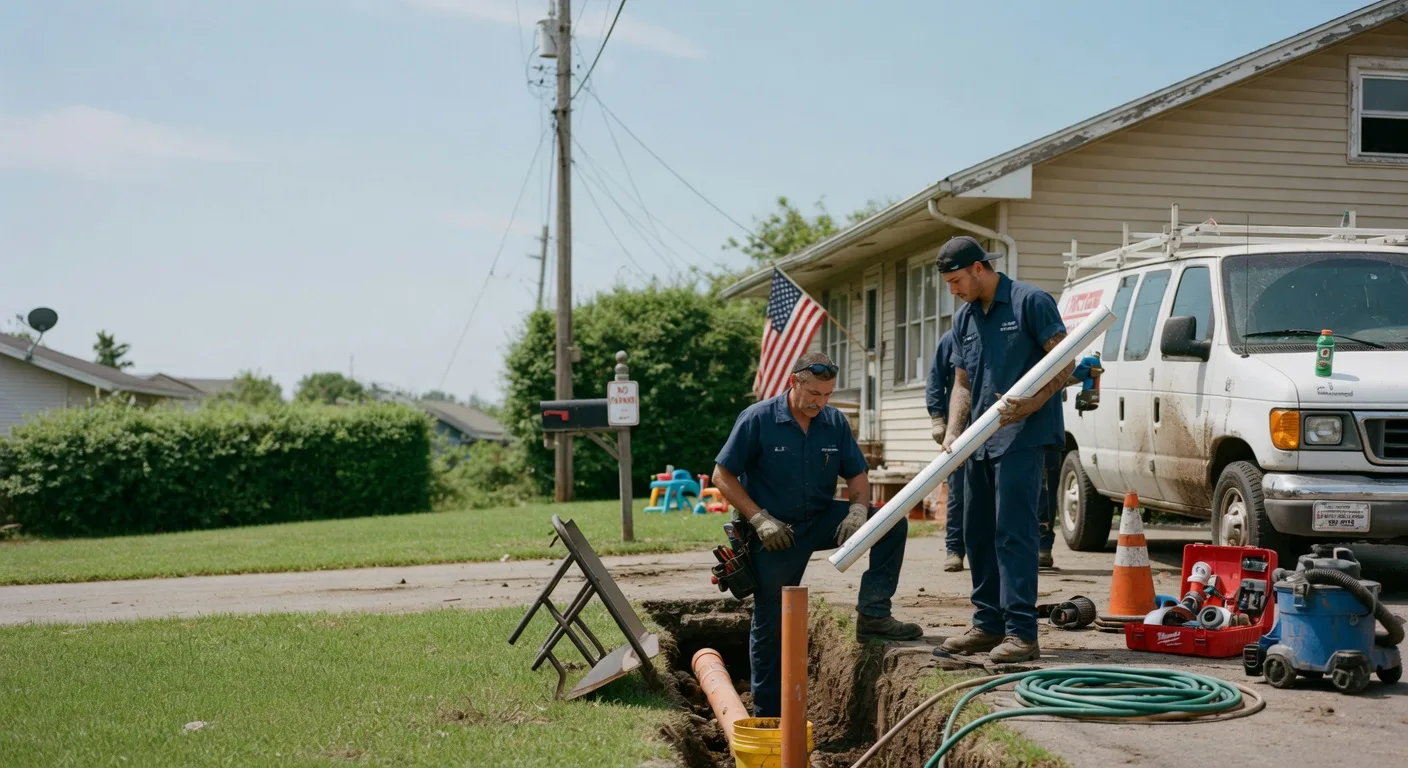
A single sink, tub, or floor drain running slow in Milwaukee, WI usually means one localized clog, not a whole-house problem, and a cable machine can clear it.

Talk to a pro
03 / 06

Main Line Cleaning

Every drain in the house backing up at once in Milwaukee, WI points to the main line, not one fixture, and needs a larger cable or jetting.

Talk to a pro
05 / 06

Sewer Line Inspection

Recurring backups or slow drains across Milwaukee, WI with no clear cause? A camera inspection finds the actual break, root, or bellied section first.

Talk to a pro
06 / 06

Sewer Line Repair

Multiple drains backing up at once in Milwaukee, WI, water pooling around a cleanout, or sewage odor in the yard usually points to a damaged sewer line, not a single clog.

Talk to a pro

About Expert Plumbers Co

Drain Cleaning and Plumbing Company in Milwaukee, WI

Milwaukee's drain problems come from two things: the age of the housing, and where the rain goes. The MMSD's Pipe Check program points at homes older than 1950, or any home that frequently has water backing up in the basement.

Bay View (53207) has a historic district of workers' cottages and brick duplexes built between 1870 and 1915. Riverwest (53212) is bungalows, duplexes and Polish flats. A Polish flat is a stacked two-family house built in stages: a cottage was jacked up, a new foundation was dug and poured under it, and the lower apartment went in beneath. Two units stacked in one structure, with the lowest fixtures sitting low in the building.

Most of the MMSD service area has separate storm and sanitary sewers. The combined section is small, and all of it sits inside the City of Milwaukee and Shorewood. So a Milwaukee storm backup is often not the street sewer filling up. It is clear water getting into the sanitary side:

  • Cracked laterals. The city's own program lists cracks, open joints, root intrusion points and faulty connections to the public sewer as ways rain and groundwater enter the lateral. Roots in an open joint also catch paper and grease.
  • Foundation drains tied into the sanitary line. The city notes that homes built before 1954 had foundation drains connected to the sanitary sewer.
  • Downspouts. MMSD points at downspouts as a route for stormwater into the sewer during heavy rain.
  • Grease on the pipe wall. Kitchen lines narrow over time, and a cable only opens a hole through the build-up.

The lateral from the house to the street sewer is the homeowner's responsibility. Tell the independent plumber you are connected with whether the trouble shows up in dry weather or only in storms. It changes the whole job.

01

Symptom-first

One slow fixture is a different job from every drain in the house backing up.

02

Independent

Pricing and on-site work are set by the local provider, not by us.

03

Local

Partners serve the city you called from.

04

Whole-system

Fixture drains, branch lines, main line and sewer lateral.

Why choose us for Drain Cleaning

Milwaukee, WI Plumbers for Drain Cleaning

What it looks like: the floor drain in the basement weeps or overflows, the toilet gurgles when something else drains, or a slow tub turns into every drain slow. One slow fixture is usually a clog in its own trap or branch. Every drain at once, or the basement first, means the main line or the lateral.

Stop running water and call now if: sewage is rising from a floor drain or basement toilet, more than one fixture is backing up, or water is nearing the furnace or electrical panel. When MMSD sends a Water Drop Alert text during heavy rain, holding off on laundry and dishes is a sensible habit, because it keeps water out of a sewer that is already full.

Safe homeowner checks: plunge a single fixture, clear the stopper or strainer, make sure downspouts are not draining toward the foundation or into the sewer, and note whether trouble appears only in storms. Chemical openers are a poor idea in a pipe that may be cracked or holding standing water.

Cable, jet or camera. A cable machine handles a single clog and light roots. Hydro jetting cleans grease and scale off the pipe wall and clears heavy roots that a cable cannot get through. A camera inspection is the step to take when the line keeps backing up, when the home is pre-war, or when the question is whether the lateral is cracked, offset or bellied. The picture also tells you whether lining the pipe is realistic or it needs digging.

What drives the cost. Access: whether there is a cleanout, and how far the lateral runs to the street. Scope: how much has to be opened, from a basement floor to the yard and terrace. Materials: relining in place versus replacing the pipe. Permits: in Milwaukee, plumbing work needs a permit from the Development Center, pulled by the plumbing contractor doing the work, and the job is inspected as it progresses. The state plumbing code (SPS 381 to 387) is what the inspector checks against. The independent plumber sets the price and schedule.

If the backups only come with heavy rain, ask whether the city's lateral rehabilitation work or MMSD's Pipe Check program applies to your address. That is a separate track from clearing the pipe.

Expert Plumbers Co is a referral service. We do not employ plumbers, dispatch crews or set prices. We take a description of your drain problem and connect you with an independent local plumber. Call (380) 262-9173.
  • Independent local partners
  • 24/7 emergency phone line
  • No obligation
  • Nationwide coverage
  • Symptom-first matching
  • Nights and weekends
Call (380) 262-9173
Why choose Drain Cleaning in Milwaukee, WI

How it works

Four simple steps to Drain Cleaning in Milwaukee, WI

01

Tell us the symptom

Tell us what the drain is doing and where you are.

02

Matched to the job

We match the problem to a plumber who has the right equipment for it.

03

They contact you

They contact you directly to arrange the visit.

04

If it is not right

If they cannot help, tell us and we find another.

Coverage

Drain Cleaning Services Across Milwaukee, WI

Covering Milwaukee, WI and nearby ZIPs.

Milwaukee · Largest city in Wisconsin known for brewing, sports, and the lakefront. · Humid continental climate with cold snowy winters and warm summers.

Neighborhoods we cover for Drain Cleaning

  • Bay View
  • Riverwest
  • East Side
  • Third Ward
  • Walker's Point
  • Shorewood
  • Wauwatosa
  • Washington Heights

Local landmarks

  • Milwaukee Art Museum
  • Lakefront
  • Miller Park
  • Pabst Mansion
  • Harley-Davidson Museum

ZIP codes we serve

53202 53203 53204 53205 53206 53207 53208 53209 53210 53211 53212 53213 53214 53215 53216 53217 53218 53219 53220 53221 53222 53223 53224 53225 53226 53227 53228 53233 53295
Drain Cleaning Milwaukee, WI FAQs

Drain Cleaning FAQs

Frequently asked questions about Drain Cleaning

Questions Milwaukee, WI homeowners and businesses ask most about Drain Cleaning, with straight answers.

Talk to a real person
What does it mean if the cable machine stops at the same distance every time?
The cable stops dead at the same spot every time, and the plumber says it feels like a wall. That tells you the problem is fixed in one place. It is not a soft blockage that moves. Common causes are tree roots that have grown in at a clay pipe joint, a section that has dropped or cracked, or a bellied line where the pipe sags and holds water. It can also be a bad coupling where one pipe no longer lines up with the next. A cable can punch through roots or grease, but it cannot get past a pipe that has shifted or broken. Note the distance the cable went in. That number tells the next plumber where to look, and whether the fault is inside the house or out in the yard. Safe homeowner check: if only one fixture is slow, go easy on water and note which drain it is. Stop running water and call now if several drains back up, if water comes up in a tub or floor drain, or if there is a sewage smell indoors. A camera inspection is the right next step, because it shows what the cable hit. Roots or heavy grease may clear with hydro jetting. A broken or bellied pipe is a repair, and the cost depends on access, how much has to be dug or opened, the materials, and any permit required. Expert Plumbers Co is a referral service. Call (380) 262-9173 and we will connect you with a plumber in Milwaukee, WI for Drain Cleaning. Mark the spot where the stoppage sits if the cleanout or access point makes that possible, and tell the plumber whether the line runs under a slab, a driveway or a lawn. That decides how the repair is approached and how much has to be opened up. In older homes, the stoppage is often a clay joint that has been invaded by roots or has slipped, and the fix may be a spot repair on one section instead of replacing the whole run. In newer homes a stop at the same distance is more often a poorly set joint or a fitting that was installed out of line. After the camera has found the fault, ask for the footage or a few stills. They show the pipe material, the condition on either side of the problem and whether other weak points are coming. Until the repair is done, expect the line to clog again, so keep water use low and avoid putting anything but waste and paper into it.
Water or sewage is seeping out around the cleanout cap in my yard. What does that mean?
If liquid is seeping up around the cleanout cap, the sewer line is full to ground level at that point. The cleanout is a capped pipe that gives a plumber direct access to the main line, and it is often the lowest open point on the system. When a blockage sits downstream, waste water rises until it finds the weakest spot, and that is frequently the cap. Less often the cap itself is the problem: a cracked cap or worn threads can weep a little after heavy use. The difference is the smell and the timing. A damp ring with no odor that dries out is one thing. Grey or dark water with a sewage smell that returns every time the house uses water points to a blocked or partly collapsed line. Look at the rest of the house. If one fixture is slow, the trouble may be local. If several drains are slow, toilets gurgle, or a floor drain or shower fills when the washer runs, the main line is the likely culprit. Safe checks you can do: Keep children and pets away from the wet area. Hold off on laundry, dishwasher cycles and long showers. Do not unscrew the cap. A line under pressure can spray sewage when the cap comes off, and that is a health risk. Stop running water and call now if sewage is reaching the yard in a steady flow, if it is entering the house, or if the seep keeps growing while you are using as little water as possible. On the repair side, a cable machine is often enough for a soft blockage such as paper or grease. Roots, heavy grease build-up or scale usually call for hydro jetting or a cutting head. A camera inspection afterwards shows whether the pipe is cracked, bellied or offset at a joint, which decides whether cleaning will hold or whether a repair is needed. Cost depends on how easy the cleanout is to reach, how far the blockage sits from it, how much needs to be dug or removed if a repair follows, and permit requirements under local code. If the line has to be opened for repair, the local building department may need to be involved. To be connected with an independent local plumber in Milwaukee, WI, call Expert Plumbers Co on (380) 262-9173.
My house is old and the sewer might be Orangeburg pipe. What does that mean for cleaning?
Orangeburg is a pipe made from wood pulp fibers pressed together and sealed with pitch, also called bituminous fiber. It was used for house sewer lines in the middle of the last century, and some homes still have it between the building and the street. It was never as strong as clay, cast iron or modern plastic. Over time the pipe softens and loses its shape. It can turn oval, sag, flake at the inside wall or collapse. Joints are easy targets for roots. So an old house with repeated backups and a history of roots or low spots may be sitting on this kind of line, though only a camera can confirm the pipe material. That matters for cleaning, because the usual tools are rougher on Orangeburg than on other pipe. A heavy cutting head on a cable can tear at a soft wall. High pressure from a jetting nozzle can strip layers off or push through a weak spot. A plumber who knows or suspects the material will start with a camera inspection, use gentler tools, and avoid forcing a machine through a section that has already deformed. Tell the plumber on the phone how old the house is, any earlier line repairs, and whether the line has been cleaned before. If you can, mention what you have seen: slow drains, a repeat clog, wet soil over the line. Safe checks you can do: Ask whether any earlier paperwork notes the pipe type. Limit water use if backups are frequent. Stop running water and call now if sewage is coming into the house or the yard. Cleaning may buy time on a line in fair shape, but it does not strengthen the pipe. If the camera shows a collapsed or badly ovaled section, the realistic options are lining where the shape allows it, or replacing the line. Cost depends on pipe length and depth, access, what has to be dug or removed, the repair method and permits under local code. To be connected with an independent local plumber in Milwaukee, WI, call Expert Plumbers Co on (380) 262-9173.
The plumber cleared my line but said the pipe itself has a problem. How do I make sense of the options he lays out?
It is a letdown to pay for a cleared drain and then hear that the pipe is the real trouble. It is also useful information, as long as you understand what you are being offered. Start by asking what the problem actually is. Common answers include roots entering a clay joint, a bellied section that holds water, a cracked or collapsed pipe, heavy scale in cast iron, or a joint that has pulled apart. Each one has a different fix, and each one has a different level of urgency. Ask how the plumber knows. The strongest answer is a camera inspection you can watch. If the opinion came from the feel of the cable alone, a camera look is a fair thing to request before spending a lot of money. Then ask for the options in a clear order, from least to most work. Keep clearing it on a schedule. This suits roots or grease when the pipe is otherwise sound. It does not fix the pipe, so ask how often it would likely be needed. Spot repair. A short section is cut out and replaced. This suits one crack or one bad joint, and depends on how deep it is and what has to be dug up. Trenchless lining or pipe bursting. A new liner or pipe is pulled through the old one with less digging. It depends on the pipe's condition and the line layout. Full replacement. The failed line is dug up and replaced. This is the most disruptive choice and usually the last resort. For each, ask what happens if you wait. A small root problem may give you months. A collapse usually does not. Cost depends on how deep the pipe is, how much has to be opened up, what is above it, such as a driveway or a slab, the materials, and permits under local code. Ask the plumber to put the scope in writing so another plumber can price the same job. You are allowed to take time and get a second opinion, especially if the pipe is not backing up today. If you need a drain cleared in Milwaukee, WI, Expert Plumbers Co can connect you with an independent local plumber at (380) 262-9173.
We live in a manufactured home. Why do the drains under the floor keep clogging?
You live in a manufactured home, and the drains keep clogging. A sink runs slow, the tub gurgles, or the toilet backs up every few months. The cause is usually under the floor, where you cannot see it. Drain lines in a manufactured home run through the belly wrap, between the floor framing and the ground. The runs are long and shallow, with very little fall, so water and solids move slowly and grease, soap and paper settle. Over time the hangers that hold the pipe can fail and the line sags. A sagging section becomes a bellied line that holds water and collects debris. Lightweight plastic pipe can also crack or pull apart at joints when the ground shifts. Cold weather adds a problem. Pipes under the floor can freeze, and a frozen drain looks like a clog until it thaws. Roots can also reach the outside section where the home ties into the sewer. One slow fixture is usually a branch or trap problem near that fixture. If sinks, tub, toilet and washer all slow down together, or water comes up in the lowest fixture, the main run under the home or the sewer connection is the likely spot. Safe homeowner check: Run each fixture one at a time and note which are slow. Look for a cleanout outside near the home and see whether it holds water, without opening it under pressure. Do not crawl under the home if it is wet or smells of sewage. Stop running water and call now if sewage is coming up inside, if water drips from the belly wrap, if the floor feels soft, or if the smell of sewage is strong under or around the home. A cable machine is often enough for a soft clog in one branch. Hydro jetting is the better tool for build-up on the wall of a long, shallow run. A camera inspection is the right step when clogs keep returning, because it can show a sag, a cracked joint or a separated pipe. Expert Plumbers Co is a referral service. We connect you with an independent local plumber in Milwaukee, WI. Call (380) 262-9173. Ask the plumber how they will reach the pipe and whether the belly wrap has to be opened and resealed. The scope depends on access under the home, how much belly board or insulation comes off, the pipe material, whether hangers need replacing to restore the slope, and any permit or code requirement.

Talk to a local Plumber

Need a plumber in Milwaukee, WI for Drain Cleaning? Call now.

Describe the problem and we connect you with a local Plumber for Drain Cleaning or Emergency Drain Cleaning. Call (380) 262-9173.

Call (380) 262-9173 Services